
By Aidan Mortensen | KOAL News
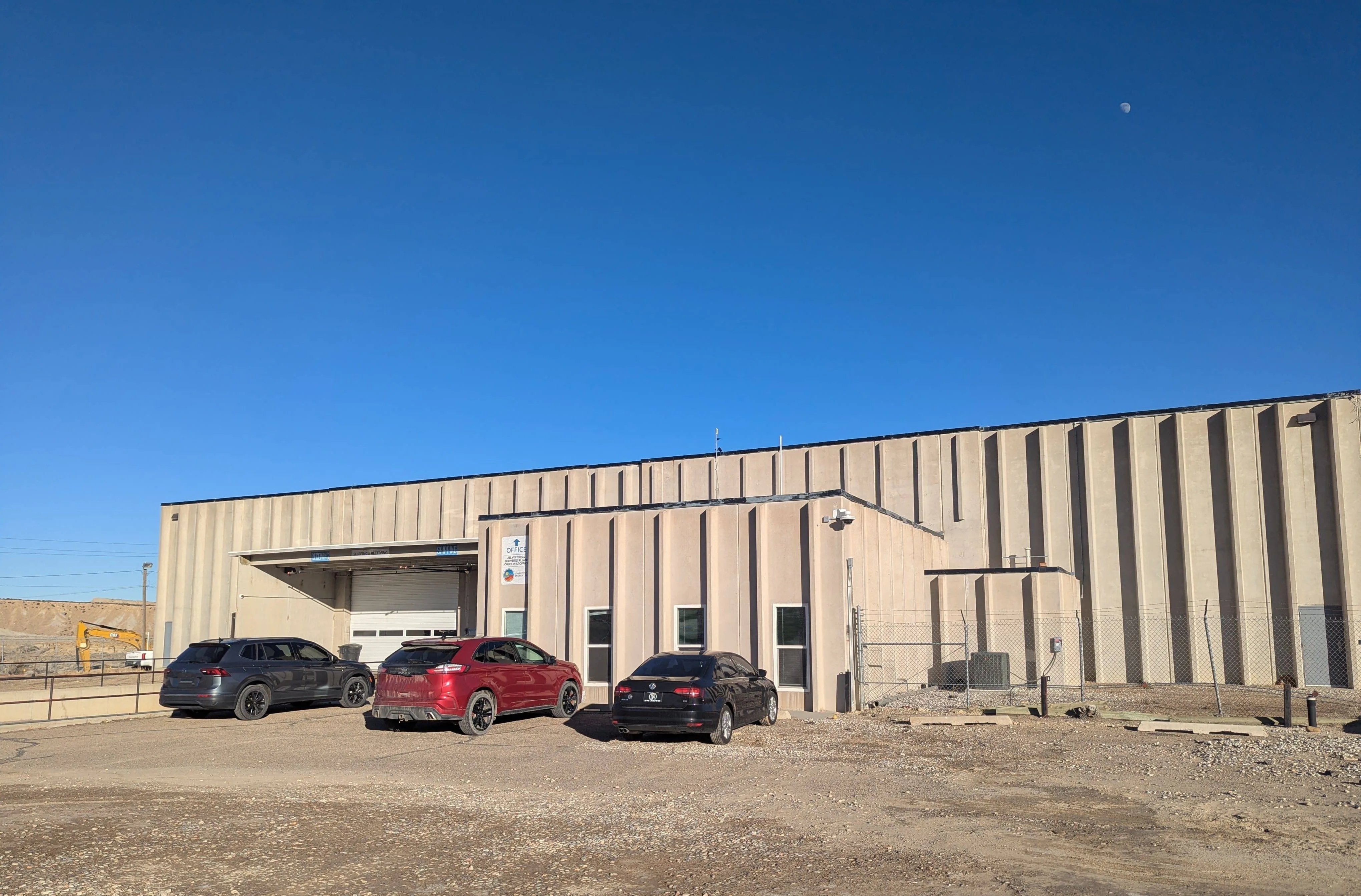
After being acquired by the state of Utah in 2024, the San Rafael Energy Research Lab has made significant strides in usage and energy innovation.
Among the innovations coming to the USRERL, the facility announced partnerships with Valar Atomics to construct nuclear test reactors at the site, and Natura Resources for commercial-stage molten salt reactor development.
To discuss these additions to the lab and preview what may come in 2026, Castle Country Radio was joined by Lab Director Jaron Wallace, who provided an insider’s perspective on the USRERL.
“Valar Atomics came sort of out of the blue, it felt, this last year, and since then we’ve negotiated the contract with them. They’ve held a groundbreaking ceremony here, and they’re now underway in building both their test reactor and their fuel fabrication facility here, so great to see the progress that they’ve been making,” said Wallace of the Valar project.
Announced in May, Valar Atomics aims to turn on an advanced nuclear reactor on American Soil by July 4, 2026, the country’s 250th birthday. In a televised announcement for the project, Utah Gov. Spencer Cox stated the project was “great news for Utah.”
“We made some really poor choices that stopped us from being the dominant nuclear power in the world when it comes to energy production,” he added. “Utah has played a key role in critical minerals when it comes to uranium and others. We are ready to start building nuclear in Utah.”
Wallace described the feeling at the lab when the agreement was announced,” It’s always been a dream of mine to have a test reactor or multiple here, so as we were talking with Valar, we pitched the idea of this being a site for their United States test reactor; they started to fall in love with the idea.”
He continued,” They came out, visited the site, and said this was nothing short of perfect. Before we moved forward, we had a couple of town halls with the community, got a lot of support from the community, and so they decided to move forward and haven’t pumped the brakes at all since.”
One key point made during these hearings was that nuclear was not aiming to replace coal in an area built on the fuel source. Instead, the USRERL shares Utah’s ‘Operation Gigawatt’ mentality of taking an all-of-the-above approach to energy production.
In a previous interview with Castle Country Radio, Cox spoke on the need for an all-in approach to energy within the state,” We have a huge energy shortage in our country right now, and in the state of Utah. We need to double our energy production over the next 10 years. We are an all of the above state. We’ve got our amazing coal resources, and we need to keep those going,” explained Cox,” We’ve got incredible natural gas opportunities here, and we have these renewable opportunities.”
Wallace echoed this sentiment,” We see a growing need for energy in our world, and so it’s not a question of replacement. It’s a question of addition.”
When it was originally constructed, the lab worked heavily with molten salt. This background helped lead to a partnership with Texas-based Natura Resources to advance development of its advanced molten salt reactor.
“USRERL is equipped with specialized facilities capable of measuring the scientific properties and characteristics of molten salts – key data required for regulatory qualification and reactor licensing,” reads a release from the company. “The lab also supports research into medical isotope production, a complementary area of innovation that leverages the unique properties of Natura’s liquid-fuel salt reactor design.”
Wallace addressed the partnership,” They’re well on their way with their test reactor, but wanted a location that was set up with equipment and staff to do their qualification of their fuel and of their molten salt, which is what this lab was originally built for. All the equipment that was purchased was to do molten salt testing and work, and so we’re happy to put this great lab to use with Natura.”
The lab also works extensively in carbon dioxide, conducting research on supercritical CO2 for power plant turbines. Putting the reaction into layperson’s terms, Wallace explained:
” Your typical power generation, say, at these coal plants, you burn the coal that makes heat. You’re going to use that heat to boil water, which turns into steam, and that drives your turbine. Unfortunately, in your turbine, you need everything to be 100% steam. When you cycle back to your heat exchanger, you need everything to be 100% water. To get steam back to water, you have to take a lot of energy to cool it down. That process is not very efficient. One way that we can get around that is using another fluid. We can use carbon dioxide, heat it to high temperatures, and push it to high pressures. The way that carbon dioxide behaves at that point, it acts like a liquid and like a gas. We can actually heat it and use it to drive our turbines. We save a lot of energy. We can see quite a bit of efficiency increase from that.”
Additionally, the USRERL performs research on solar technology. Wallace again emphasized the importance of researching all forms of energy production,” We need to focus on all energy types, all energy sources. Every energy type has downfalls and upsides, and the best path forward is to solve as many problems in as many industries as we can, drive the cost of solar down, be able to make more energy per square foot, make nuclear cheaper, make coal more efficient. These are all the goals of trying to make all energy types better.”
Looking ahead to 2026, Wallace shared an optimistic outlook on the future of the lab: “Once we start getting some of these licenses, it’s easier to operate with nuclear companies because we’re set up in that way. We’re set up with the security and the site licenses, and not forgetting the other energy sources. We’re having a huge push to try to diversify, look at these energy technologies, geothermal, wind, and some of these others that we haven’t done testing in yet, and be able to explore those and continue to broaden our horizons.”