
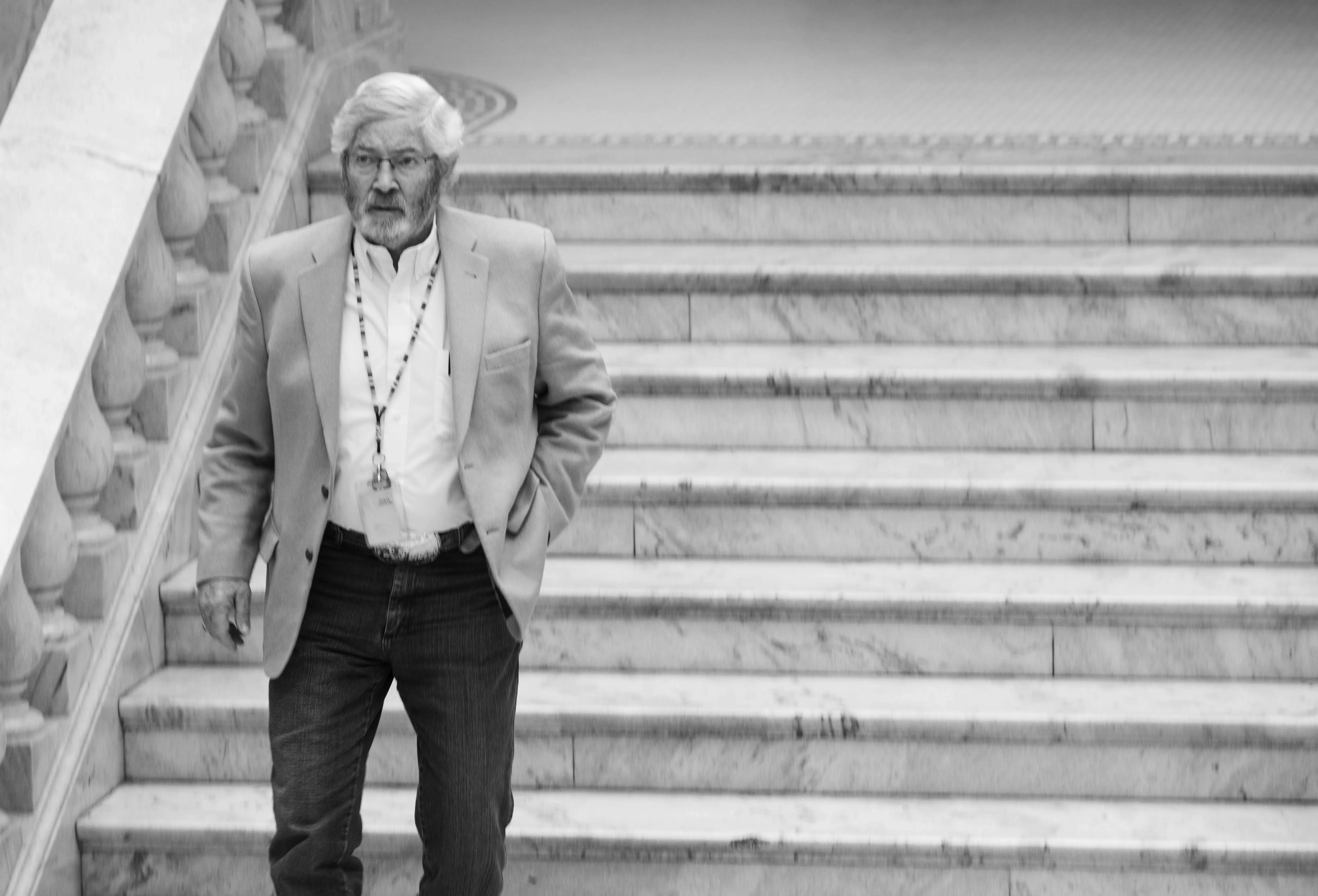
By Aidan Mortensen | KOAL News | Photo courtesy of the Utah State Senate
Following the repeal of HB267, the controversial bill that prohibited government employers from negotiating contracts with unions representing public employees, the state legislature is again eying changes to collective bargaining through SB249, introduced by Sen. David Hinkins (R-Orangeville).
Originally introduced in 2025 as a counter to HB267, if passed, the bill would create a state Labor Relations Board to oversee public employee labor relations at the state level.
This board would consist of the Commissioner of the Utah Labor Commission, alongside two representatives from public employers and two representatives for public employees which would be appointed by the governor. The board would designate “exclusive representatives,” or a labor organization, to represent a group of public employees in collective bargaining.
The representative organizations would have to be approved by employees working in the affected sector, with at least 30% of employees signaling support for a designated organization. If a question of representation still exists, the group must garner support from 10% of employees before being put to a runoff election.
The legislation also sets guidelines for how public employers will engage with representative organizations in collective bargaining: “The governor of the state, the governing body of a political subdivision, the commissioner of higher education, or the designated authorized representative shall represent the public employer in collective bargaining with an exclusive representative.”
However, the bill would hit one sector of public employees harder than the others, prohibiting police officers from engaging in a labor strike. According to the text of the bill: “‘Strike’ includes: (i) refusal to report for duty; (ii) willful absence from the police officer’s position; (iii) stoppage of work; or (iv) departure from the full, faithful, or proper performance of duties of employment. (2) For bargaining units that contain a police officer, each collective bargaining agreement shall contain a clause that prohibits police officers from engaging in a strike.”
This bill would not affect any collective bargaining agreement recognized or in existence before May 7, 2025.
If passed, the bill would take effect on May 6.