
By Aidan Mortensen | KOAL News | File Photo
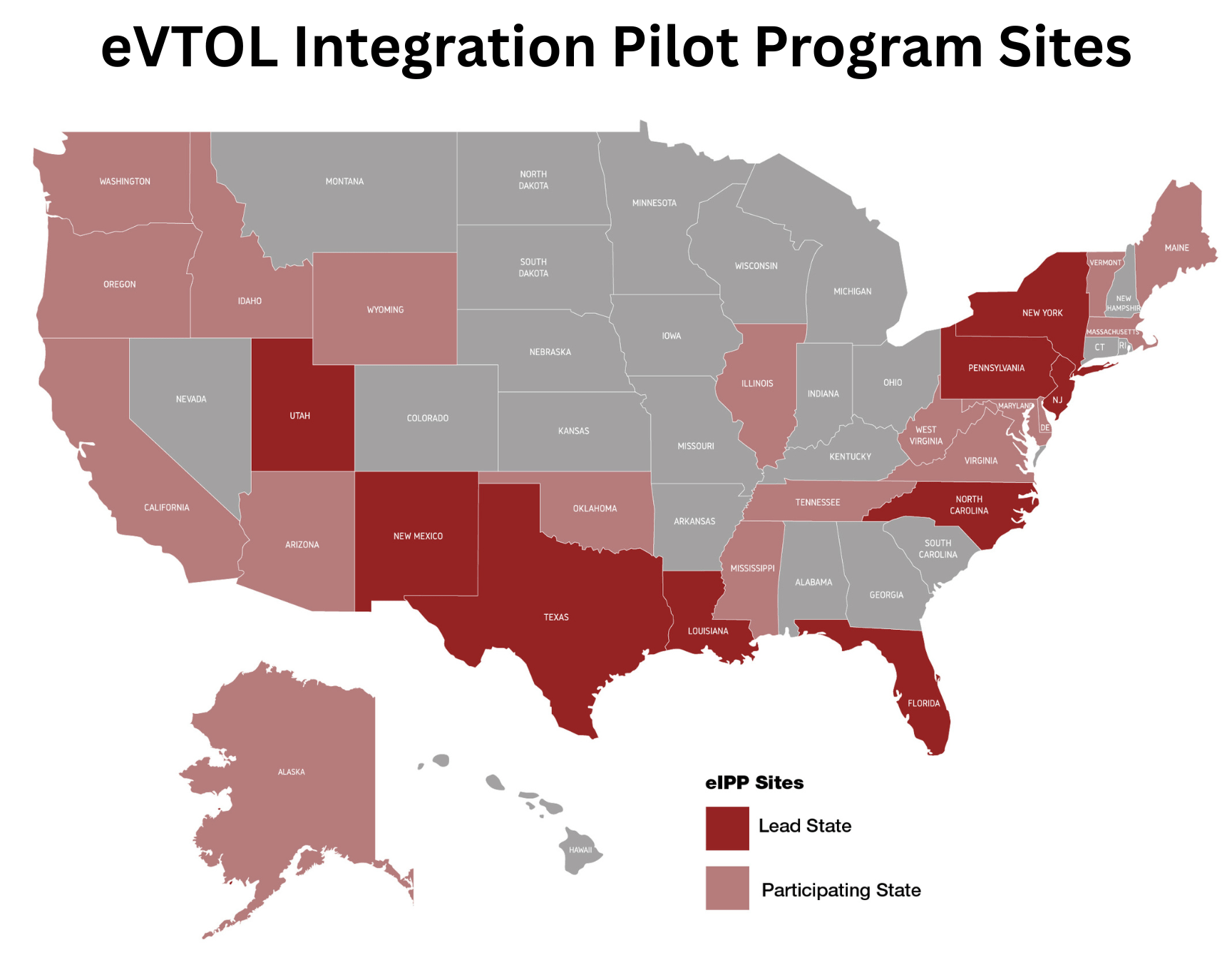
On Monday, March 9, U.S. Secretary of Transportation Sean Duffy announced that the Department of Transportation had selected eight states, including Utah, as pilot sites for the Advanced Air Mobility and Electric Vertical Takeoff and Landing (eVTOL) Integration Pilot Program (eIPP).
The program will see the state testing electric flights that can take off and land vertically, a move which the DOT says is “accelerating the safe integration of next-generation Advanced Air Mobility aircraft into the national airspace.”
For Utah, this helps advance the goal of developing and deploying flying taxis by the 2034 Winter Olympic Games. A 2025 agreement between the state and manufacturing companies BETA Technologies and 47G | Utah Aerospace & Defense aims to have eVTOL cargo-carrying aircraft operating in the Beehive State by the end of 2026.
The push for Utah’s involvement in the program came from Rep. Mike Kennedy, who led a multistate letter to the DOT pushing for the state’s participation.
“eVTOL tech is transforming aviation, and Utah is now one of the eight states tasked to lead. That means high-quality jobs, major investment, and a direct role in shaping the future of aviation,” said the representative in a social media post.
Utah has been selected by @SecDuffy and the FAA as a pilot site for next-generation electric aircraft.
I led the multi-state letter to @USDOT, and this is exactly the outcome Utah worked for.
eVTOL tech is transforming aviation, and Utah is now one of the eight states tasked… pic.twitter.com/zjkBWPJniI
— Rep. Mike Kennedy, M.D. (@RepMikeKennedy) March 9, 2026
Per the DOT, the Utah Department of Transportation will work with” Four states spanning the Pacific Northwest, the Rocky Mountains, and the Plains of Oklahoma will test a wide range of next-generation aircraft and operational concepts.”
This agreement establishes partnerships between the state and BETA Technologies, Ampaire, Joby Aviation, and others.
“These partnerships will help us better understand how to safely and efficiently integrate these aircraft into the National Airspace System,” said Federal Aviation Administration Deputy Administrator Chris Rocheleau. “The program will provide valuable operational experience that will inform the standards needed to enable safe Advanced Air Mobility operations. We appreciate the strong interest reflected in the many proposals we received.”
Nationwide, more than 30 proposals were submitted for participation in the program, with technical review teams from DOT and FAA evaluating each, narrowing it down to eight approvals.
Other states participating as pilot sites include New York, Louisiana, Texas and New Mexico.