By Aidan Mortensen | KOAL News
An effort spearheaded by the Utah GOP Political Issue Committee, Utahns for Representative Government, to overturn Prop 4, the 2018 voter-approved initiative that served as Utah’s anti-gerrymandering law, has failed to make the November ballot following signature removals in key Senate Districts .
Following removals in SD15, the initiative now only meets the signature threshold in 25 of Utah’s 29 senate districts, falling one short of the required 26.
Statewide, the campaign to repeal Prop 4 met the signature requirement, but with the missed Senate District requirement, the initiative will not appear on November’s ballot.
A major downfall of the campaign to overturn Prop 4 was the 45-day window for individuals to remove their names from the petition. Following the final submission of signatures, UFRG held a surplus of 658 signatures in vulnerable districts, an amount that quickly dropped as removal requests rolled in.
“We have significant concerns about the practices utilized by the opposition and continue to review the signature validation and removal process,” said Utah GOP Chair Robert Axson in a statement to media outlets. “Utahns spoke loudly in the face of an unprecedented onslaught of biased media coverage, outside influence and judicial interference. Whether now or in the future, by litigation or initiative, we will Repeal Prop 4. This fight is not over but just beginning.”
The effort to repeal Prop 4 received endorsements from major political figures, including President Donald Trump, Vice President JD Vance, Donald Trump Jr. and Sen. Mike Lee.
During public hearings held statewide in the lead-up to the initiative, residents of the Castle Country shared differing views on the matter. Carbon County resident Katy Corneli said of the initiative,” It seems to me that it was the people themselves that passed Prop. 4 … And that’s why I don’t quite understand why, when the people themselves passed it, the legislature decided that it doesn’t actually respect our values.”
In Emery County, differing views were presented. Republican Party Chair Jesse Sloan said Prop 4 – and its ensuing use in court to redraw the state’s congressional boundaries – was “just judicial activism.”
In 2018, when the proposition was on the ballot, it garnered a 50.3% majority statewide. In Emery County, the proposition was disfavored by the public, with over 400 votes separating the yeas from the nays. In Carbon County, the inverse was seen, with Prop 4 favored by over 400 votes.
The repeal efforts followed the Utah Supreme Court’s ruling that the legislature could not change citizen ballot initiatives without violating citizens’ constitutional right to the initiative process. This ruling, in particular, reinstated Prop 4’s original intent of creating an independent redistricting committee, rather than the advisory role the state legislature modified it to.
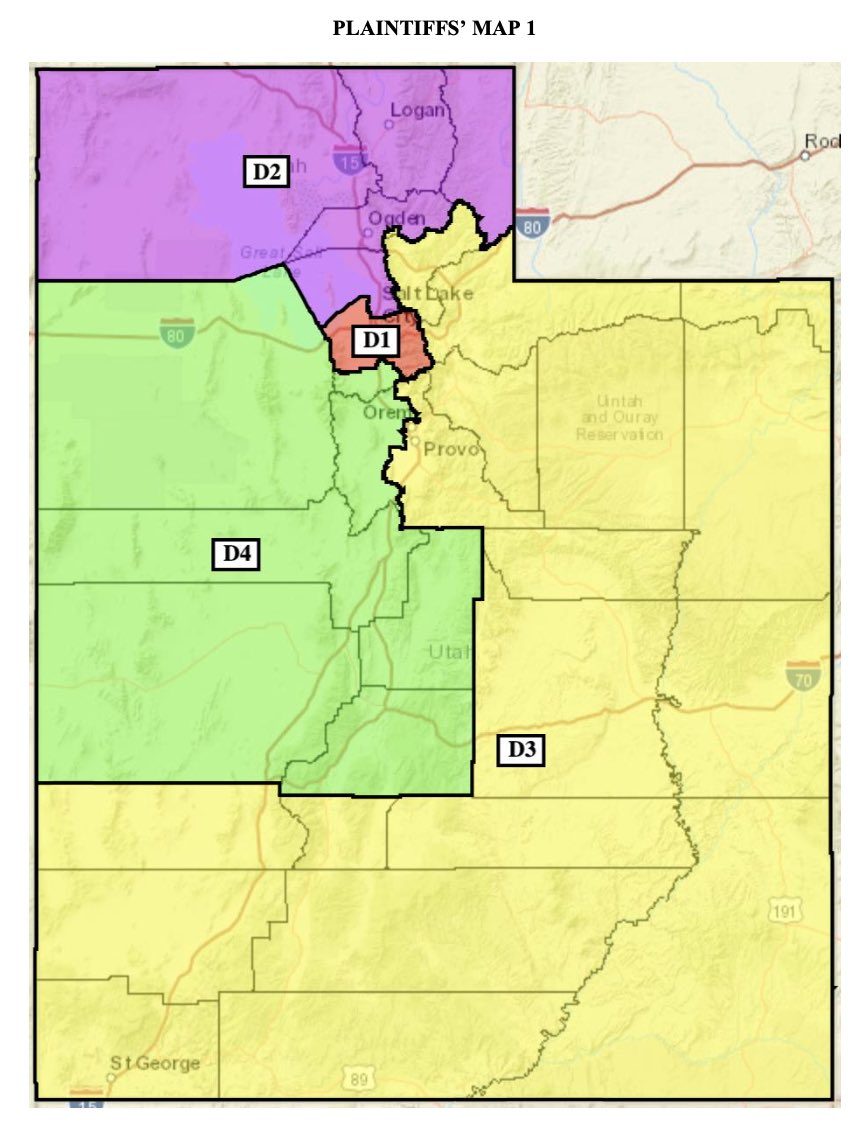
Following the ruling, the court ordered Utah to redraw its congressional boundaries, leading to the selection of the current congressional map for Utah, which combines Castle Country with a bulk of Southern Utah.
The last successful ballot initiative in Utah occurred in 2025, when the Protect Utah Workers Coalition garnered enough signatures to put HB267 – which banned public employee unions like police officers, firefighters and teachers from engaging in collective bargaining – on the 2026 ballot. However, the state legislature repealed the law before it could be voted on.