
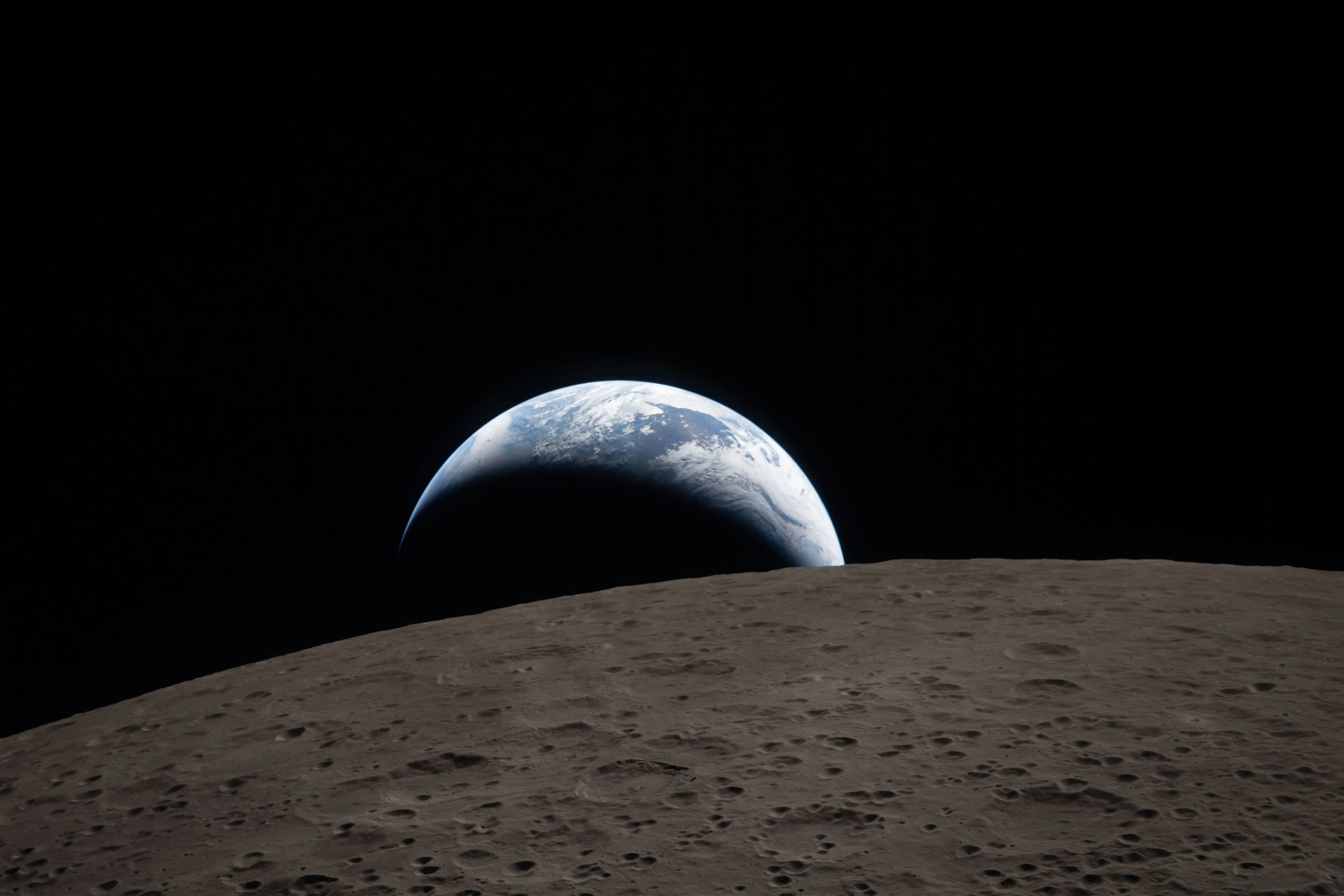
By Aidan Mortensen | KOAL News | Photo courtesy of NASA
Marking the first manned lunar mission in 50 years, the Artemis II rocket launched from the Kennedy Space Center on Merritt Island, Florida, on Monday, April 1. The historic launch drew widespread public interest and sparked renewed interest in space travel.
Forbes adventure journalist Jim Clash joined the KOAL newsroom to relive the occasion and share background info on the Artemis launch.
Speaking first on the scale of the rocket, Clash explained,” The rocket itself is 325 feet high. It’s a little less than the Saturn V, which was what took us to the moon in the 1960s and 70s. So, a very impressive rocket. You know, you’re looking at it, and the only time you can see scale is if there are people near the bottom of it. And then you go, ‘oh my God, that thing’s huge.'”
Following several delays, attendees were concerned about whether the launch would occur. Clash discussed the anxiety surrounding another possible delay,” Artemis has been delayed so many times; this was the first one with humans, four astronauts, going around the moon, so it was really important that they get it right … The weather can scrub a launch, a little leak somewhere in the rocket can scrub a launch, so you’ve got to be really careful, and so leading up to it, we had wind during the day, and we were worried that if you have a 35-mile-an-hour gust, they’ll scrub it.”
Fortunately, the launch was only delayed by 10 minutes, officially sending the first crewed lunar mission in 50 years to space.
Examining the emotion of the moment, Clash shared what the atmosphere was like following the blastoff: “Well, number one, all the journalists, we were the closest you could get, a little over three miles, and everyone started cheering and screaming. And so it took about 17 seconds, I think, for the sound to reach us from the actual rocket. So you saw it light up, and then slowly, you know, go up with really, really bright light.”
He continued,” You’re just screaming and hearing this, and then all of a sudden, boom, you hear the sound of the rocket, and you see it rising, and, you know, it’s majestic. And people were quite emotional. I talked to the third in command at NASA, and she cried when it went up.”
Four astronauts make up the Artemis II crew, led by Commander Reid Wiseman, Victor Glover, Christina Koch, and Jeremy Hansen. The astronauts represent some of North America’s best and brightest.
“When you think about Apollo, Neil Armstrong, Buzz Aldrin, all those guys, they were incredible pilots, fought in the war, Buzz was shot down, you know, Neil Armstrong was one of the best pilots. So those guys were the best of the best, and I think, you know, going back to the moon, we better have the best of the best, because it’s not easy,” said Clash
Clash also discussed the difference between the astronauts who man the crew and the participants in tourism space flights. “When you talk about Blue Origin, yeah, they’re working on a moon rocket, but up until now, they really haven’t done anything except these suborbital tourism flights where people get out and call themselves astronauts after 11 minutes of sitting in a pretty cozy cabin with these tight spacesuits on.”
Added Clash,” You don’t train, you don’t wear a spacesuit. They come out calling themselves astronauts, but they’re not. They’re space tourists, and there’s nothing wrong with that if you have a million bucks to do it. But interestingly, Blue Origin shut that program down for now because they’ve got to focus on their moon rocket.”
After claiming the record for the farthest distance traveled from Earth, the Artemis II crew has slingshotted around the moon and is now on a return trip back to Earth. The craft is expected to reenter the atmosphere and splash down in the Pacific Ocean on Friday, April 10.