
By Aidan Mortensen | KOAL News
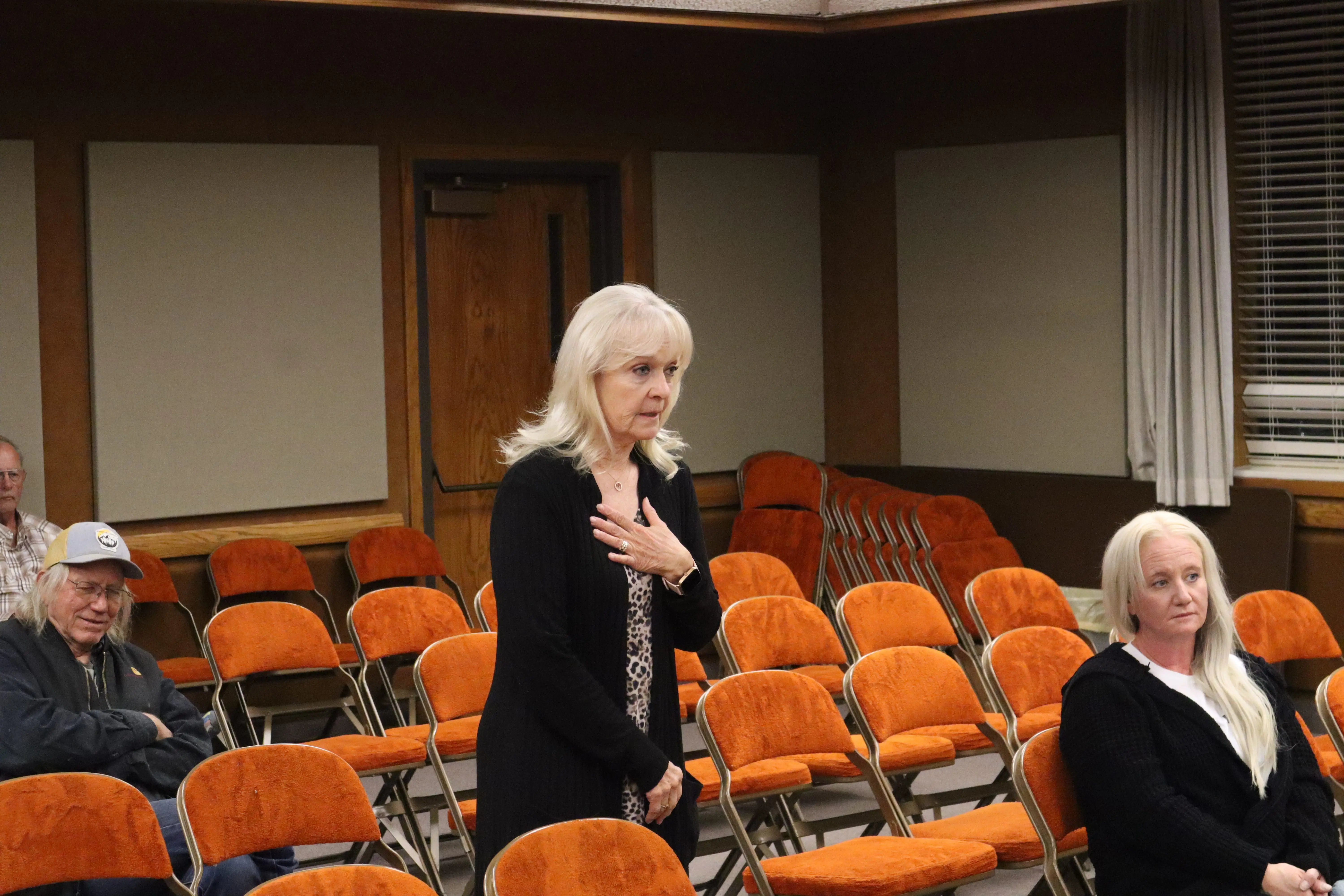
Residents of the Castle Country had a second chance to voice their opinions on the effort to overturn Proposition 4 – Utah’s anti-gerrymandering law – by the Political Issue Committee (PIC) Utahns for Representative Government, which held a hearing on Monday, Nov. 10, in Castle Dale.
Opening the meeting was Jesse Sloan, who was chosen to facilitate the evening’s proceedings. Sloan shared preprepared remarks from the PIC, which explained,” Under Section nine, article one of the Utah Constitution, it says the legislature shall divide the state into Congressional, legislative, and other districts accordingly. Not the governor, not a bureaucrat, but the legislature. Why? Because it is our constitutional republic. The legislature is the body closest to the people.”
Sloan also read from the fiscal analysis of the initiative by Legislative Fiscal Analyst Jonathan Ball, who shared that the state would save an estimated $1 million every 10 years if Prop. 4 were overturned.
A week prior, in a Price public hearing on the effort, public opinion skewed against the initiative, with one commenter stating the proposal would make it so “representatives are choosing who gets to represent them.” Others questioned the validity of the estimated fiscal savings of $1 million over 10 years: “That’s a hundred thousand dollars a year. That isn’t really saving. I work at a little coffee shop, and we make that in a month and a half. Trying to repeal a bill that’s supposed to target gerrymandering for a coffee shop’s month-and-a-half revenue doesn’t seem very helpful for the state.”
The Emery County hearing posed a stark contrast, with all attendees speaking in favor of the initiative, including state Rep. Christine Watkins. “I agree with what you said about the Constitution. To me, that’s the most important thing … It is not our right as a people to just say we want to go against the Constitution. There is a process for that. If there are things we want to do, there’s a process for that. This process did not do that.”
The Representative continued,” As members of the legislature, we know who we represent, we know where we represent, and we can help. We do it, in my opinion, the way we should do it.”
“As far as this judge goes. I find it a little bit concerning that just a year ago, she wrote that we couldn’t vote on a constitutional amendment. So the voice of the people didn’t matter at that point, but it’s almost like, it’s her voice that matters more than anything,” said Sloan. “I mean, she says that the legislature has to honor this independent commission, but now she’s trying to say she has the final say. The whole thing is just judicial activism.”
One concern raised during the meeting was the slim margin by which Prop. 4 passed in the 2018 election, garnering a 50.3% statewide majority. In Emery County, the proposition was disfavored by the public, with over 400 votes separating the yeas from the nays. In Carbon County, the inverse was seen, with Prop. 4 favored by over 400 votes.
If the sponsors want to place an initiative on the ballot, they must collect signatures equal to 8% of the number of active registered voters statewide in Utah and in at least 26 of the 29 state senate districts. That number sits at approximately 144,000. Signatures must be submitted 30 calendar days after the day on which the first individual signs the initiative packet.
If successful and the thresholds are met, the initiative will be placed on the 2026 ballot.