
By Aidan Mortensen | KOAL News | Photo courtesy of the Utah State Senate
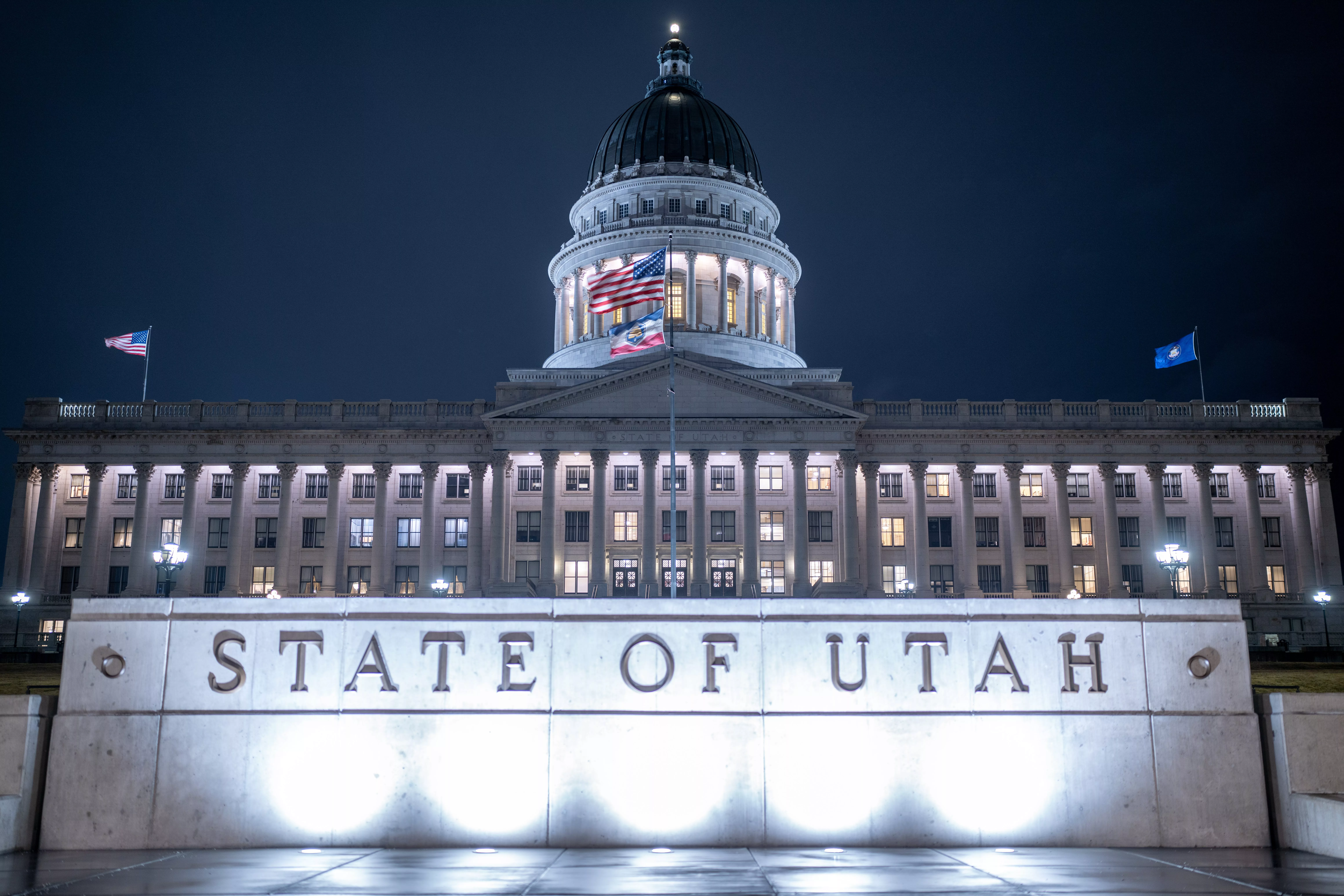
The Utah State Legislature was called into a special session on Tuesday, Dec. 9. Items of interest during this session included a resolution condemning the state judiciary, a change in filing deadlines for 2026 congressional candidates and a repeal of HB267, the controversial piece of legislation that sought to remove collective bargaining rights across government organizations.
Beginning with HB2001, introduced by Rep. Jordan Tuescher (R-South Jordan), who also pushed the original HB267, served as a repeal of the controversial bill.
“It was good policy,” said Tuescher on the house floor. “However, since that bill’s passage, House Bill 267 has been overshadowed by misinformation and unnecessary division … This was never the intent behind the bill. As such, HB2001 repeals HB267 in its entirety. It allows us to step back, to lower the temperature and to create space for a clearer and more constructive conversation.”
Leading up to the vote, the Protect Utah Workers Coalition celebrated the bill, saying in a statement,” The expected repeal is a powerful reminder of the strength of solidarity. The Protect Utah Workers coalition will continue to defend workers’ rights in the months and years ahead.”
In an 80-9-6 vote in the House and a 26-1-2 vote in the Senate, HB2001 passed and now heads to Gov. Spencer Cox’s desk. All three of the Castle Country’s representatives, Rep. Christine Watkins, Rep. Logan Monson and Sen. David Hinkins voted in favor of the repeal.
Also on the house side was HJR201, which, according to its general description,” reaffirms the constitutional and statutory role of the Legislature in redistricting.”
House Majority Leader Casey Snider (R-Paradise) introduced the bill and used it as an opportunity to accuse Judge Dianna Gibson of ignoring the state’s constitution in her decision to reject the Legislature’s congressional map and instead use a third-party map.
“How can we trust the judiciary that accuses us of gerrymandering and being biased when they create the most gerrymandered and extreme district that the state has ever seen?” Remarked the Representative. “How can we trust the judiciary when they manipulate timelines, they take away the people’s right to appeal to their very body through gamesmanship and running out the clock?”
Democratic lawmakers argued that the resolution would undermine respect for the courts during a time when an increase in threats of violence has been made against the judiciary. Rep. Grant Miller (D-Salt Lake City) stated,” The temperature at this time in this state and in this country is too hot. We have to respect the independence of the judiciary.”
In a 54-16-5 house vote and 19-7-3 Senate vote the resolution passed. It is important to note that the resolution has no binding effect on the judiciary.
On the Senate side, SB2001 changes the filing period for 2026, only for those seeking a run in the U.S. House of Representatives. This moves the period to March 9 through March 13, 2026. This is different from the other offices up for election in 2026, which file between Jan. 2 and Jan. 8.
It also allows Congressional candidates to begin gathering signatures before the filing period.
This bill passed 22-7-0 in the Senate and 56-13-6 in the House.
The final two bills of the session dealt with appellate courts and the procedures within them. SB2002, sponsored by Sen. Brady Brammer (R-Pleasant Grove), changes the rules for appeals when the State Supreme Court hears an election case, allowing instant appeals from rulings and requiring the court to set briefing deadlines and issue quicker decisions to avoid hurting candidates.
SB2002 passed in the Senate 22-7-0 and in the House 57-12-6.
Also sponsored by Brammer was SJR201, which he stated pushes election cases to the Utah Supreme Court. The resolution passed in the Senate in identical fashion, 22-7-0, and in the House, 58-12-5.