By Aidan Mortensen | KOAL News
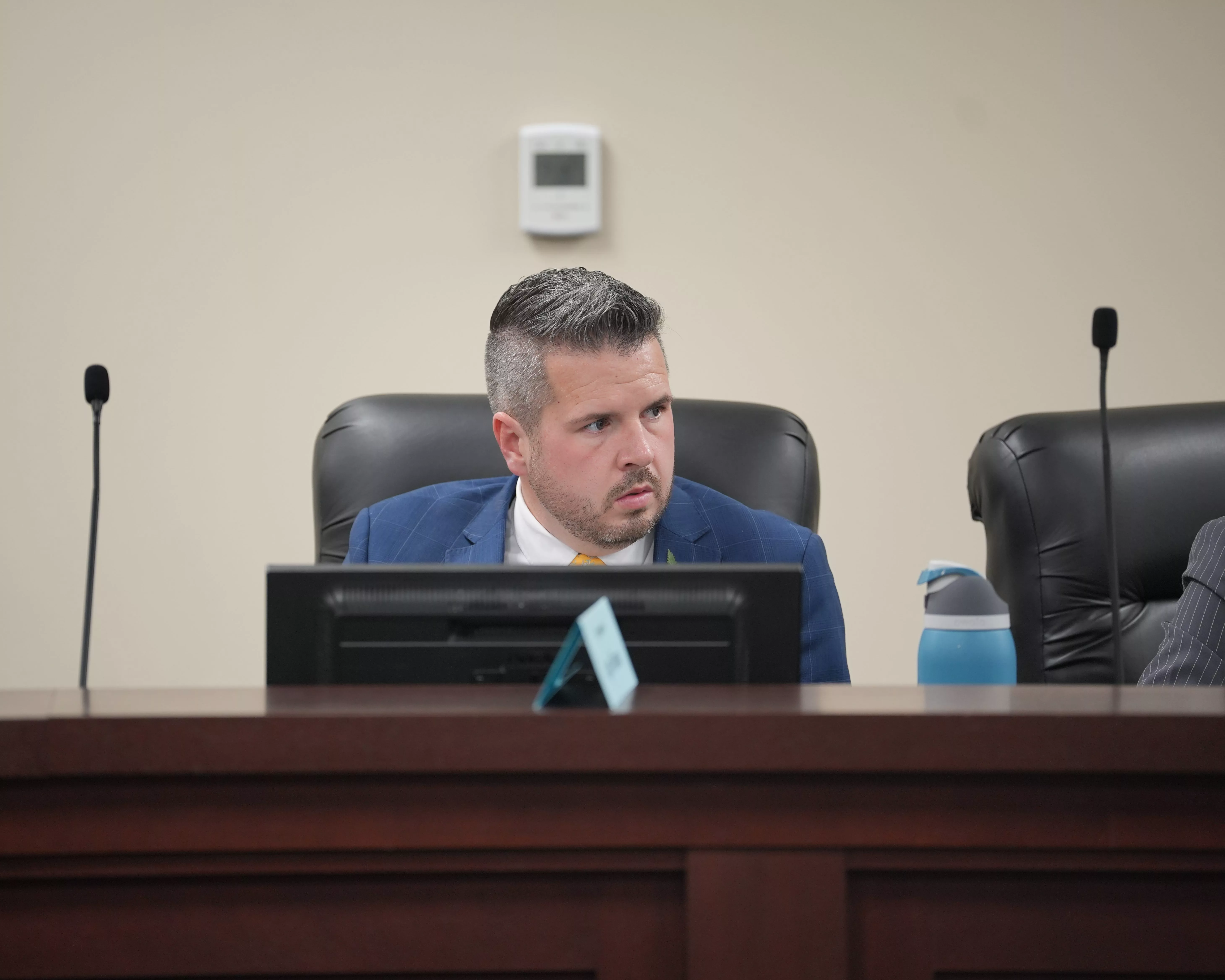
In preparation for the beginning of the 2026 session of the Utah State Legislature, Rep. Logan Monson (R-Blanding) joined the KOAL newsroom to discuss what’s in store for his sophomore session in the legislature.
Serving in HD69, which covers portions of Emery, Kane, San Juan, Grand, Garfield and Wayne counties, Monson entered the legislature in 2025 following a stint as the mayor of Blanding, Utah, from 2022-24.
Opening our conversation, Monson discussed HB35, the Bears Ears Visitor Center Advisory Committee Amendments, which extend the committee’s life for two years. “It was set to expire this year at the end of the year. All we’re doing is giving it another two years. We feel like the discussions are still being had on things related to the visitor center there and just extending another couple of years. There’s no money attached to this at all. It’s just simply saying let’s keep having this discussion for another couple of years.”
Moving forward, Monson changed his focus to HB113, a bill that aims to amend the offense of emergency reporting abuse and add penalties for offenses.
“What we’re trying to do here is, initially, when we looked at this, we came up with some things pretty local, specific to like San Juan County. But the more we’ve gotten involved and engaged in talking to other communities, especially in the district, this issue seems to be happening elsewhere at different levels and for different reasons. So what’s been happening is we’re getting 9-1-1 services dispatched for fire, ambulance and emergency-related services. And there’s not a real emergency. So it’s that they need a ride somewhere, or they need someone to do something for them at their house that they couldn’t do themselves. So really, it’s abusing the system,” explained Monson.
He continued, explaining that the bill was especially inspired by a recent incident in which a false report deprived emergency services of a real medical emergency, resulting in a patient needing to be transported in the back of a flatbed truck to the hospital.
“That’s kind of what we’re looking at, those kinds of situations where someone knowingly is abusing 9-1-1, especially when it leads to injury, death, or major costs. And we’re just trying to hold people a little more accountable.”
Monson clarified that this bill wouldn’t target accidental calls,” this doesn’t pertain if this was simply an accident, if honest mistakes are happening. Someone accidentally calls, you’re not going to fall within this if we want to hold you accountable for that. We understand if this is happening all the time. It’s very intentional, knowingly that we’re trying to take care of the problem.”
The final piece of legislation introduced by Monson is HB159, which would create a tax credit for first responder volunteers. The representative attempted to pass this bill in his freshman session, but it stalled and failed to pass before the session’s end.
“What we’re doing with this is we’re just going to give a tax credit to emergency responders based on the hours they work. We decreased the amount a little bit because we know that this year going into the session, the budget is going to be tight as it should. We should find ways to cut government spending, in my opinion. And so a tight budget is not a big problem to me.”
The credit rate would be $500 for first responders who served over 200 hours, and $250 for those who served between 200 and 100 hours.
Speaking on why he’s attempting to push the bill again, Monson explained,” When you’re in the legislature, there are processes that you follow, and there are processes to get things done. And sometimes when you’re brand-new, you do really well and get to a finish line and realize that that’s not the actual finish line. And so that’s what we’re doing this time. Understanding the process better, having good relationships with people, working on these bills beforehand, and having time to do it. That’s really the biggest difference.”
Looking at the session as a whole, Monson discussed his goals for the legislature,” A priority to me is to make sure that rural Utah has a voice at the table and at the table of health care, at the table of water, at the table of public lands. I just want to make sure that when we’re talking about policy, we understand not all policy is based on the Wasatch Front. We need to be aware of what’s going on and make sure our voice is heard there. So that’s really my main goal, to make sure that my colleagues understand the impact that legislation has on rural Utah.”
Closing our conversation, Monson stated,” I would just say be involved, be engaged, reach out, call, text, email, be part of the process that the process doesn’t work unless you’re part of it, and so be engaged. Let me know how I can help you. We’re not going to agree on everything, but I will always listen to your point of view and try and balance that as I’m going into making decisions for the state.”