
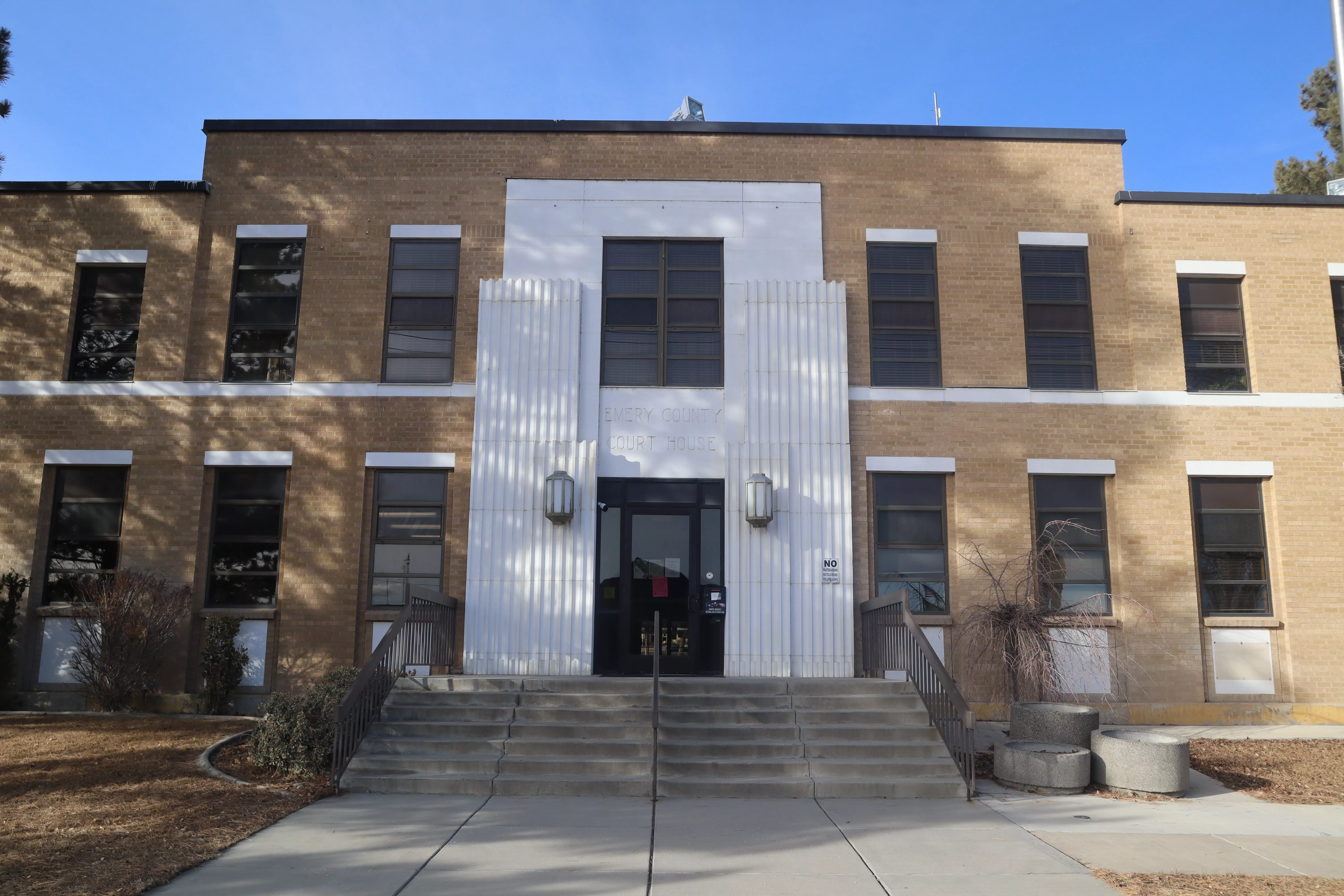
By Aidan Mortensen | KOAL News
As part of the regular meeting of the Emery County Commission on Tuesday, Jan. 20, a public hearing was held to gather input on proposed updates to the Emery County general plan. Concerned citizens took the podium to voice their concerns about the increasing number of solar projects across the county being built on agricultural land.
Derri Jewkes opened the comment period, speaking to his concerns about solar farms popping up around the county, namely the lack of language in the general plan regarding private solar and battery projects, especially on agricultural land.
“What we’re requesting at this time is to adopt a temporary land use regulation. A pause on new utility-scale solar and battery plants for conditional use permits while the county can develop clear and permanent standards,” explained Jewkes.
He continued, elaborating on the rationale behind the request,” Conditional use permits are being used beyond their intended purposes. Conditional uses were created to allow limited exceptions in zoning, not fundamentally change how the area of land is and how they’re used. Things like gravel pits, small mining operations, cell towers, utility substations, agriculture processing facilities and small commercial operations. Zoning exists to signal long-term expectations for landowners, neighbors and the county. Single CUP changes how the entire region functions, and that process breaks down.”
To address this concern, Jewkes requested the county develop a clearer policy on CUP issuance. He was also seeking reclamation bonds for these projects instead of property leases to address the removal of solar panels when the projects’ life spans come to an end.
Additionally, he wants to see more guardrails around fire safety and mitigation with these projects.
“This is not about stopping solar, but getting it where it happens right,” expressed Jewkes. “When solar land is outpacing current codes, maybe we need to look at updating our codes.”
Ron Fausett, another county resident, expressed concern over the impact solar fields could have on his property if his neighbors lease their land to solar companies. “I’d be 40 acres in a sea of solar panels.”
Next to the podium was Jaron Hansen with the Utah Farm Bureau, who first mentioned HB16, a bill currently introduced in the Utah State Legislature that seeks to remove state incentives for solar projects. HB16 is sponsored on the floor by state Sen. David Hinkins (R-Orangeville).
Hansen also discussed the double-edged sword faced by the farm bureau and governing bodies: keeping agricultural land zoned for agriculture while protecting landowners’ private property rights. “When it comes to private property rights, it’s a what-do-you-do kind of thing, right? Because it’s their situation. But, we need to keep in mind that if we lose agriculture in this county, there’s a lot that goes away with it.”
A major concern for ag producers in Utah is the ongoing negotiations over the Colorado River Compact, which could severely limit the amount of water available from the river and its tributaries.
“Some of them (farmers) are so frightened that they said, well, maybe I’ll buy into this solar thing. I get a nice paycheck for it and sell off my water shares and my water rights. To either the demand management program or whoever, because later on down the line, I’m going to lose that water anyway because of this.”
Rounding out the public comments, Bruce Wilson, a member of the county planning commission, spoke in support of both curtailing solar projects and approving the general plan.
“It’s a general plan on purpose,” he said, “It identifies the guidance for the county. Moving forward. It doesn’t get specific on individual expenses. Just because we don’t want to box ourselves in on issues, we want to be able to have flexibility and options.”
To remedy the solar issue, Wilson stated that zoning ordinances are designed for specific issues and processes and would encourage the county to implement a 180-day pause on solar project approvals while a more concrete policy is developed.
Closing the hearing, the commission opened a debate on what action to take with the plan. Commissioner Keven Jensen mentioned that in 2016, the county supported projects being developed on state and federal land, and that the new general plan is against that.
Ultimately, the commission elected to pass the current plan as is, with plans to revisit it and update the verbiage surrounding solar energy in an upcoming meeting.