
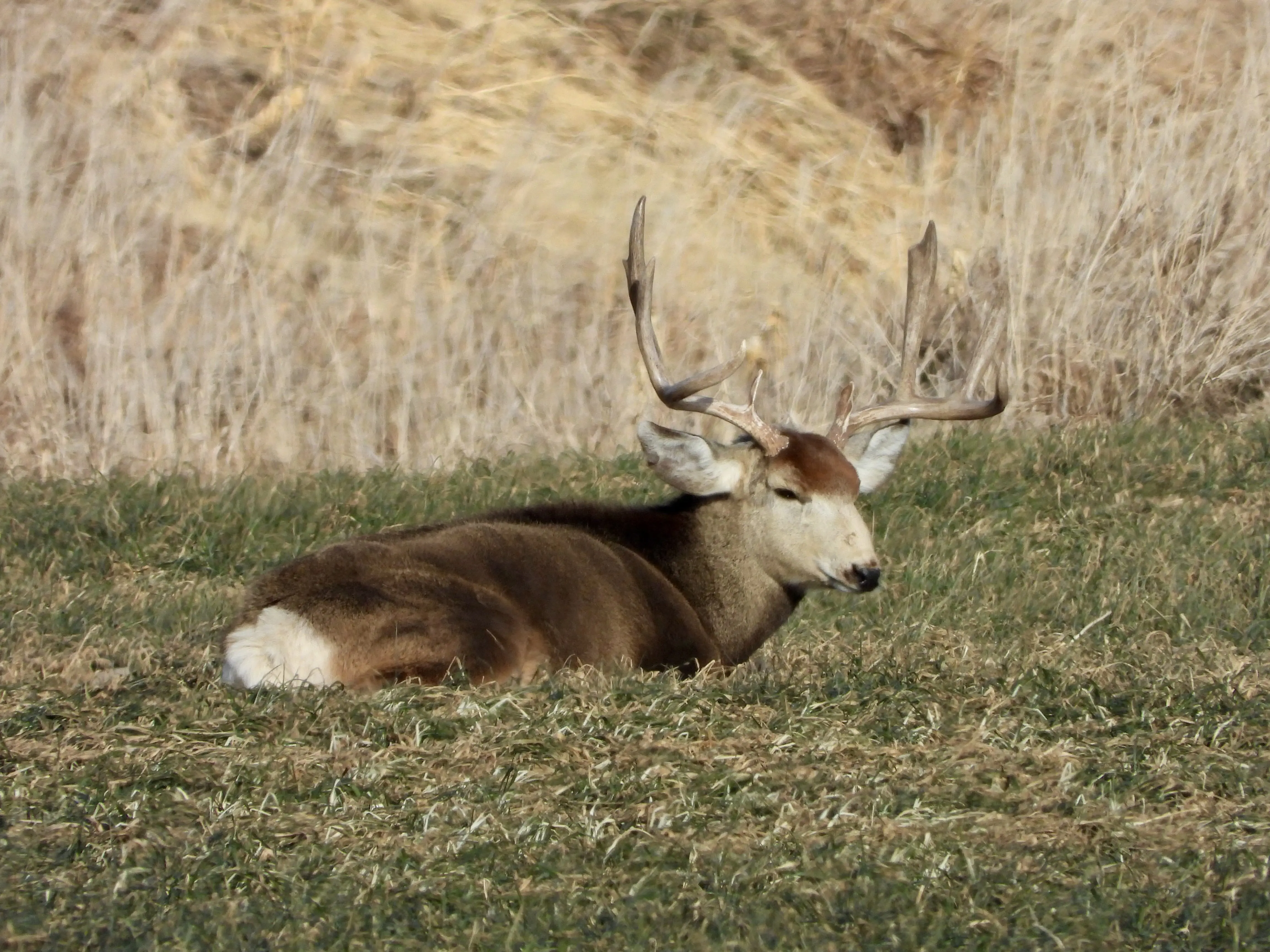
By Aidan Mortensen | KOAL News | Photo courtesy of the Utah Division of Wildlife Resources
First detected in Utah’s mule deer population in 2002, Chronic Wasting Disease has been confirmed to have spread to deer in Carbon County near Scofield.
According to a press release from the Utah Division of Wildlife Resources, “Chronic wasting disease is caused by a misfolded protein, called a prion, that accumulates in the animal’s brain and spinal cord.”
The prion that causes CWD is also responsible for causing ‘Mad Cow Disease’ in cows.
“The DWR monitors for the spread of chronic wasting disease in big game animals across Utah and conducts check stations each fall during the general-season rifle deer hunts to test harvested deer in specific hunting units,” DWR State Wildlife Veterinarian Ginger Stout said. “The samples taken from deer during last fall’s check stations were sent to the Utah Veterinary Diagnostic Laboratory in Logan, and we recently received the last test results.”
During the last cycle of sample collection, 2,126 samples for chronic wasting disease testing were collected, of which 1,479 were from animals harvested by hunters. Only 83 samples tested positive for the disease, a decrease from the previous season’s 98.
The DWR reports that a majority of the positive cases came from northeastern and southeastern Utah, but the case identified in Scofield marks a new area for chronic wasting disease in the state.
Animals with CWD will develop brain lesions, become emaciated, appear listless, have droopy ears and salivate excessively, eventually leading to death. However, animals in the early stages of the disease may appear completely healthy, making testing the only way to determine whether they are carrying the prion.
The disease can be transmitted through direct contact with an infected animal or indirectly through contact with a contaminated environment.
“We can’t accurately compare each year’s positive cases to determine how fast the disease is spreading because we sample areas of the state on a five-year rotation – alternatively, we compare each unit from year to year,” Stout said. “However, we are finding the disease in new areas, so unfortunately, it does appear to be spreading in Utah. We are continuing to do extensive monitoring and trying different hunting strategies to stay on top of the disease and its prevalence in the state.”
“While the Centers for Disease Control says the risk of transmission from animals to humans is considered extremely low, they recommend not consuming meat from animals infected with CWD,” closes the DWR release. “If you see any deer that appear sick, please report it to the nearest DWR office.“
The DWR website contains a map of areas in Utah where CWD has been detected; however, the organization notes that the map hasn’t yet been updated to include the latest cases.